 jel labs.
Alaber
An electronics and appliances online store for Kazakhstan with no warehouse of its own: products, prices and stock arrive from distributors every night and merge into one catalog.
- retail and companies
- B2C + B2B
- storefront languages
- RU · KK
the task
An electronics store needs a marketplace-scale catalog without a warehouse. Products, prices and stock live with several distributors in different formats — APIs, XML feeds, Excel sheets. The job: merge them into one clean catalog every night, price by rules, and never let a supplier's mistake reach the storefront.
what we did
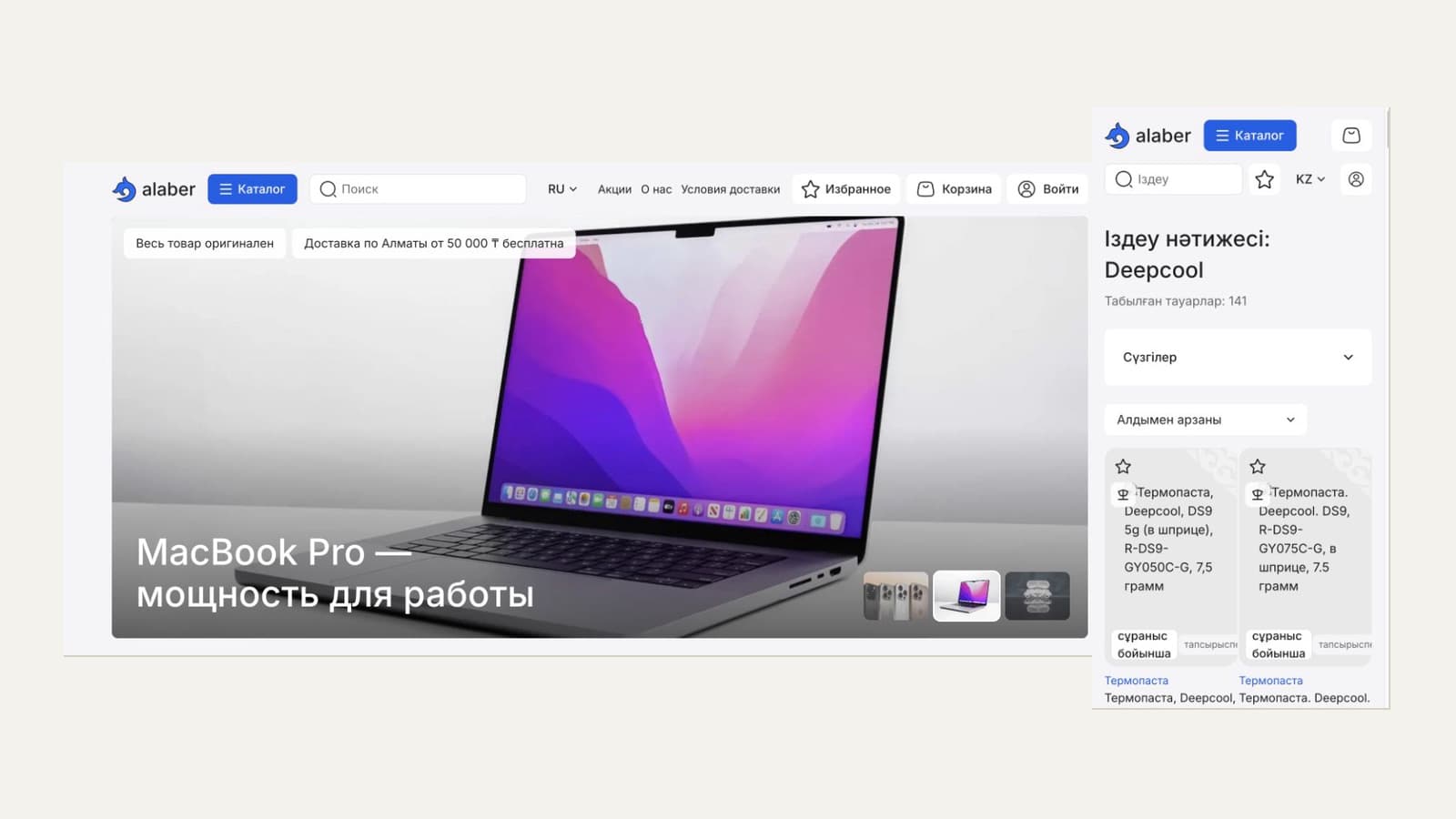
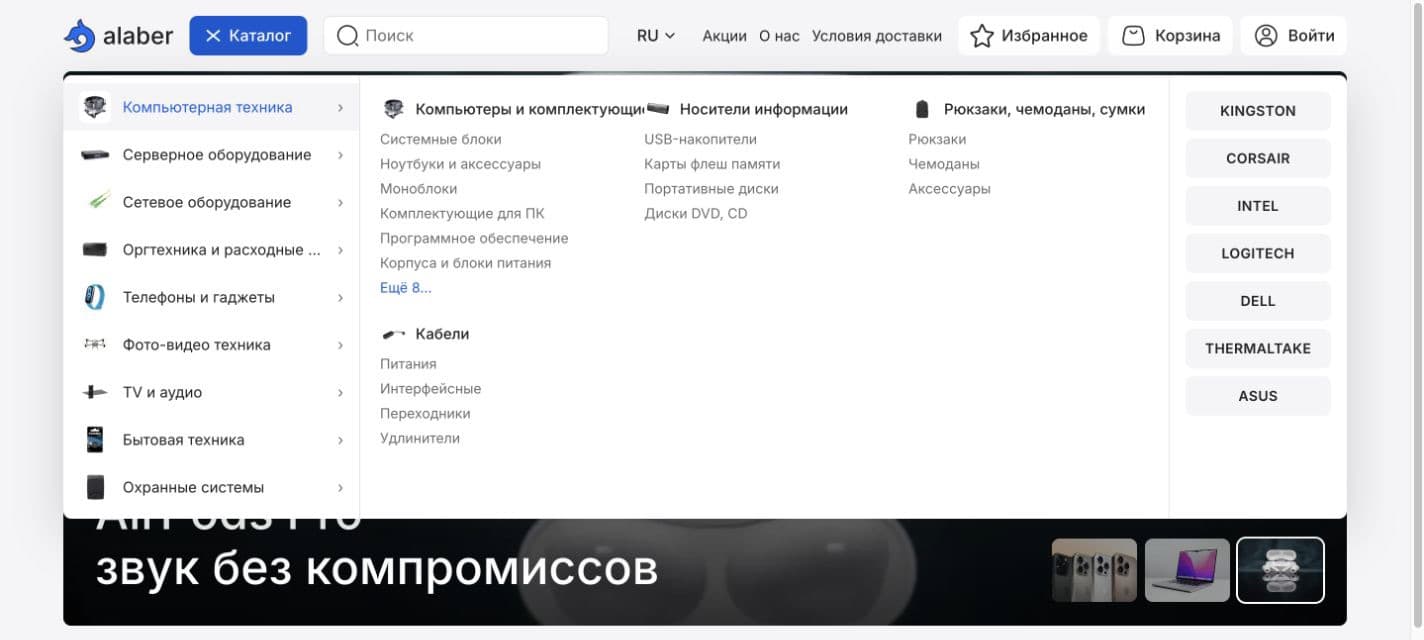
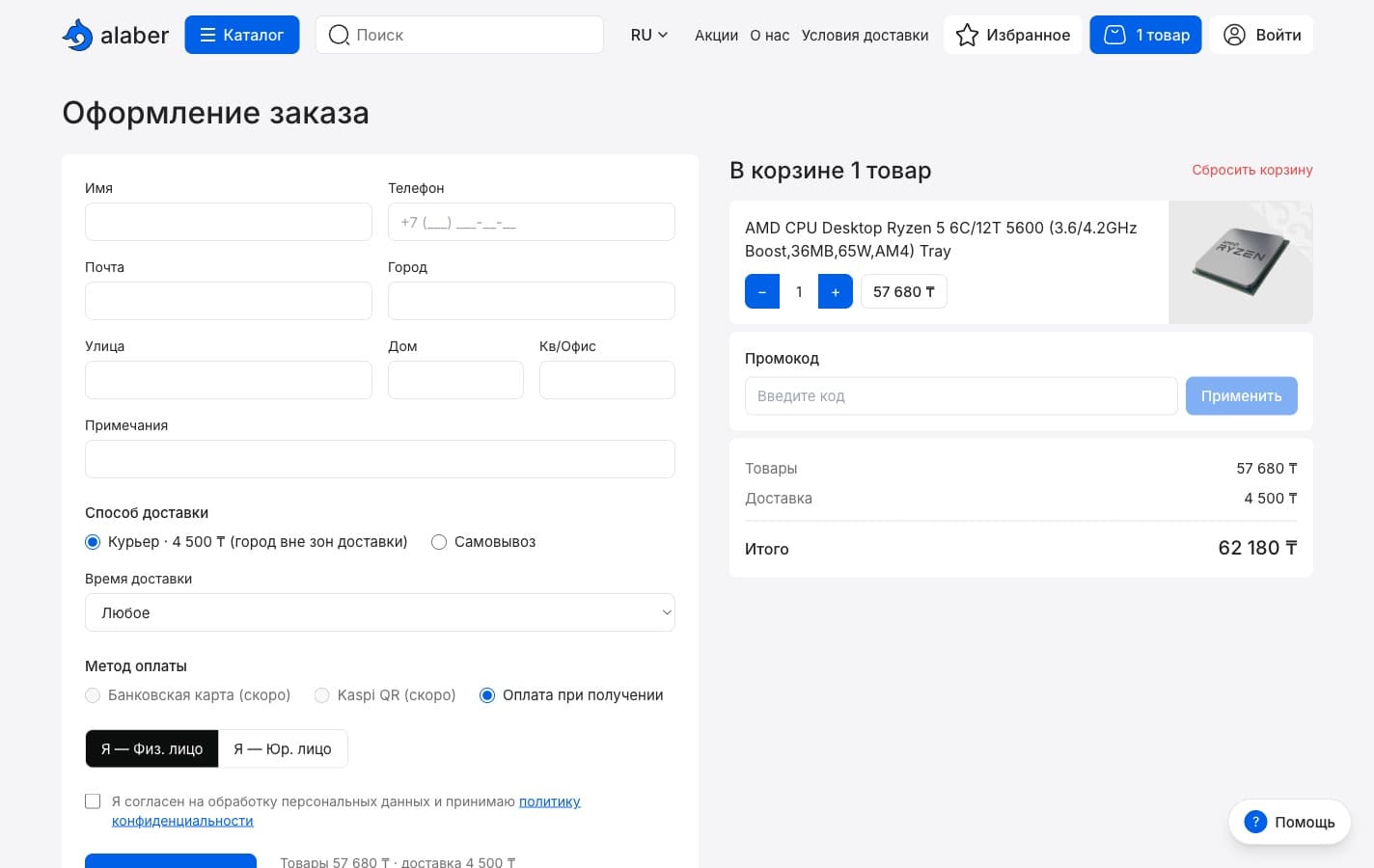
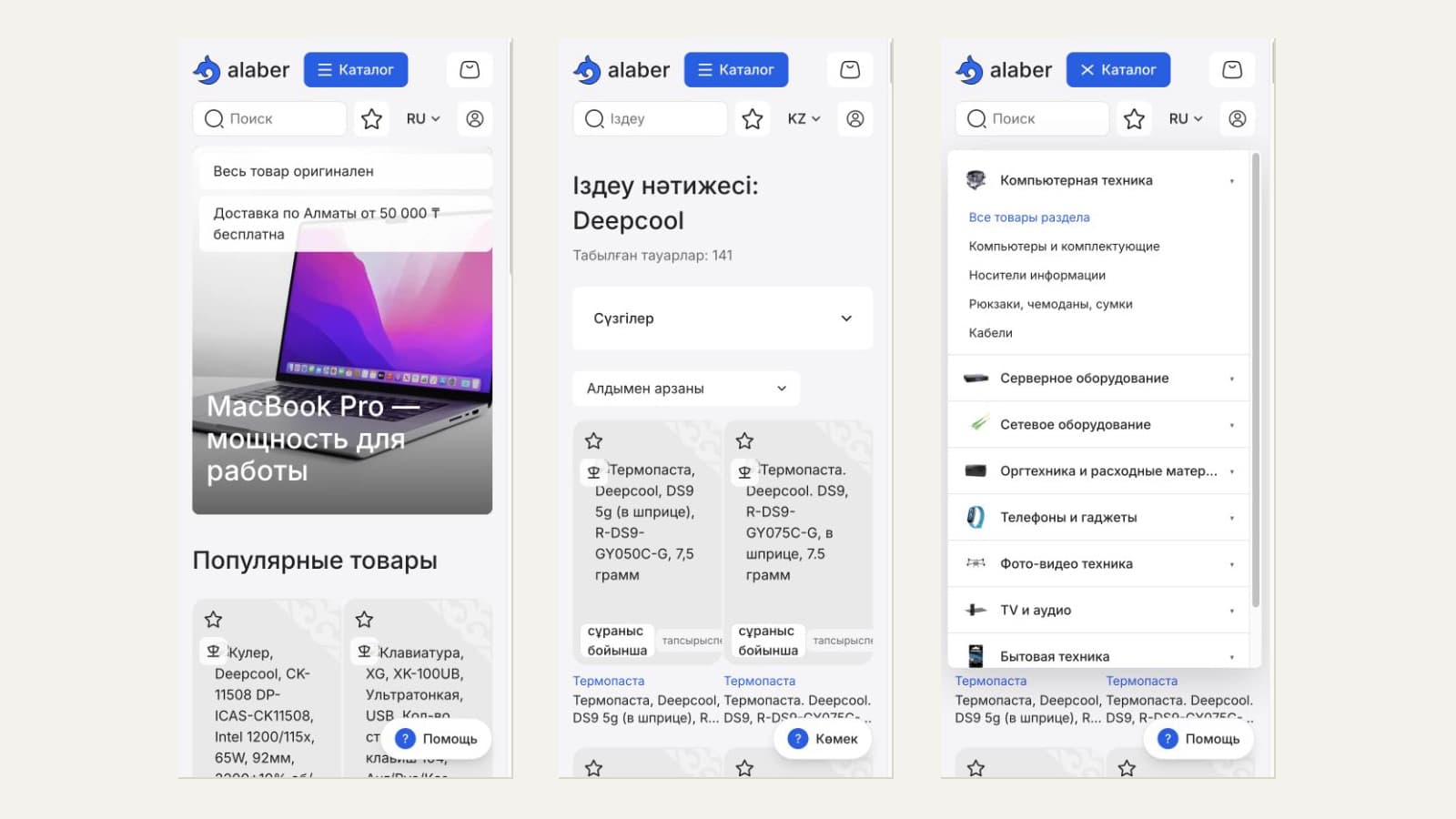
- A storefront in Russian and Kazakh: a filtered catalog, search by name, part number and specs, product pages, cart and checkout
- A B2B account: company profile, employees with roles and order approval, PDF invoices, individual prices and payment terms
- Distributor import: one catalog, with duplicates of the same product from different suppliers merged
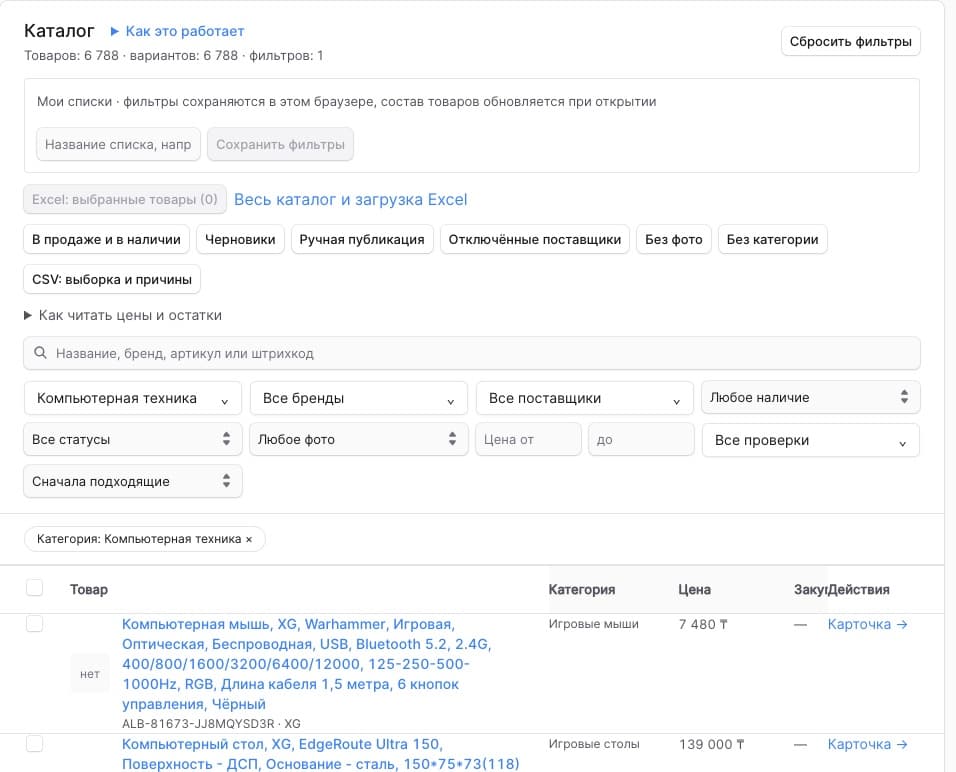
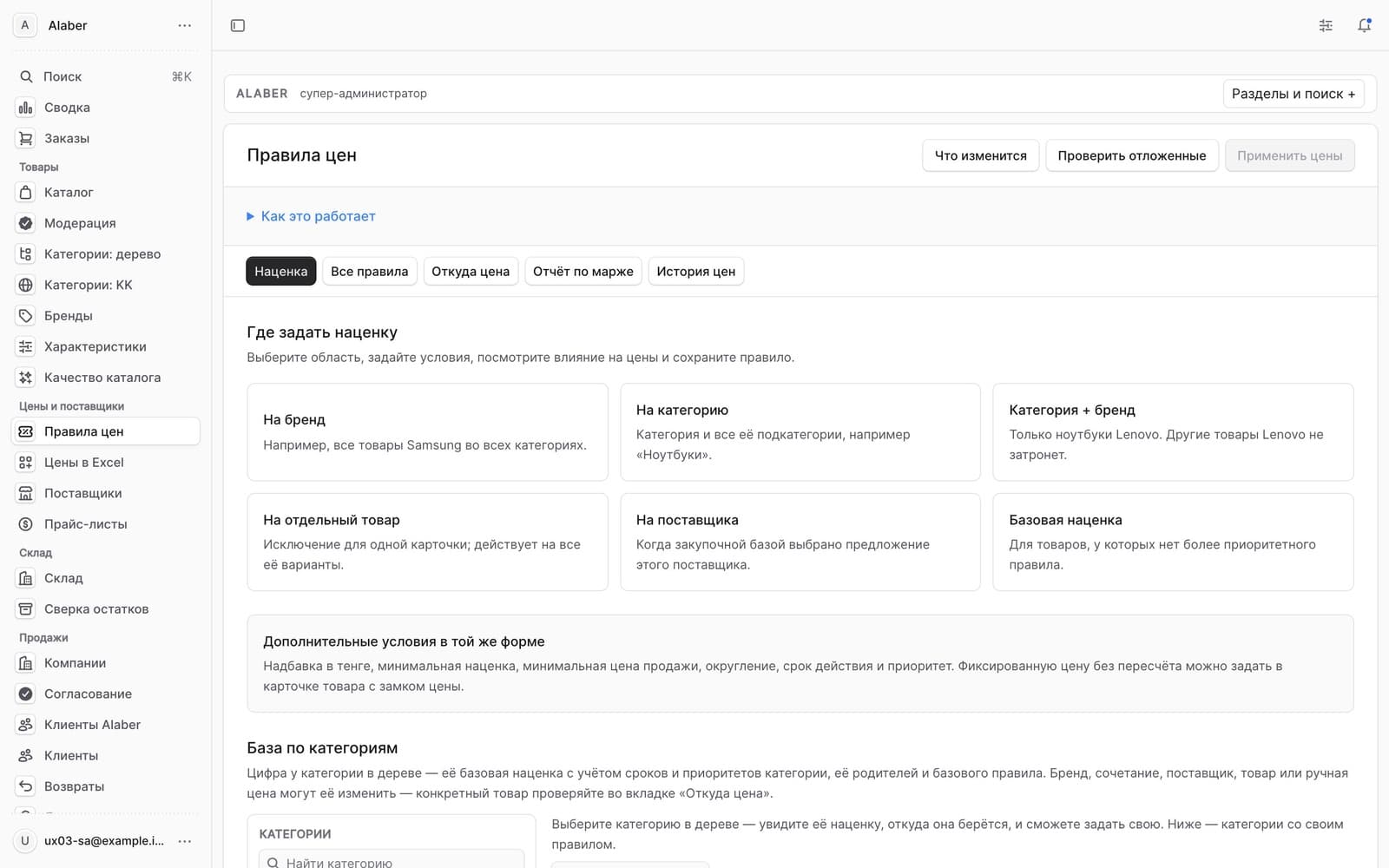
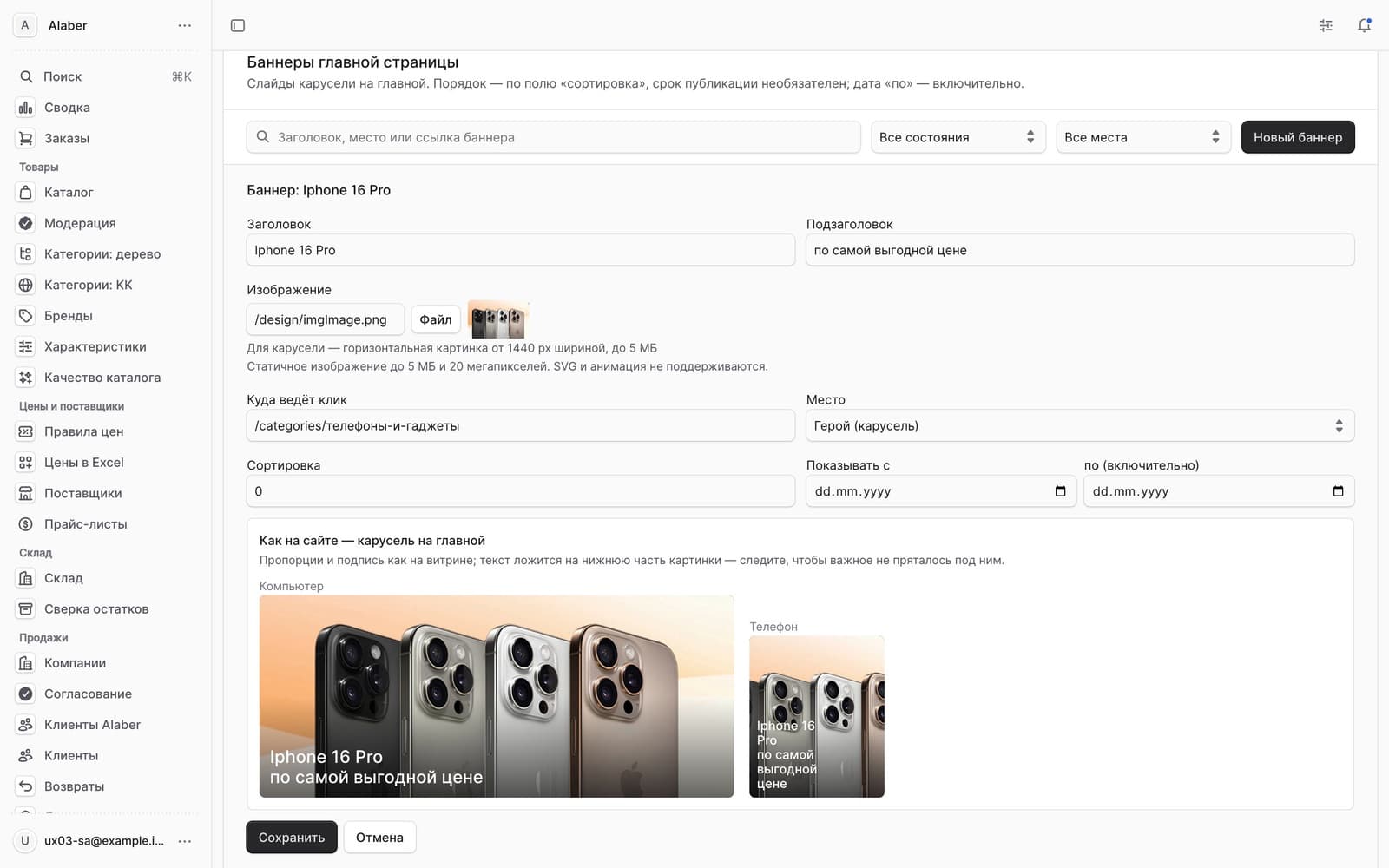
- A manager's workspace: markup rules, a margin report, “where this price comes from”, prices round-tripped through Excel, a banner editor
- Card payment and remote Kaspi payment ready to switch on once contracts are signed
Storefront
Catalog, search and checkout for retail and companies — in Russian and Kazakh.

The manager's workspace
An admin where a manager runs a huge catalog without a developer.
process & making-of
- 01
The client's spec
Work follows an agreed specification: storefront, catalog, cart, account, B2B, admin, integrations, payment, delivery, notifications and returns.
- 02
Snapshot-based import
Each price list lands in a staging snapshot first and goes live only as a whole. A failed or partial load keeps yesterday's data.
- 03
One product, one page
Duplicates from different suppliers are matched by barcode, then by brand and manufacturer part number. Photos move into the store's own storage.
- 04
Rule-based pricing
Price = the best fresh offer in stock plus a markup by product, supplier, brand, category or globally. The manager sees where every number comes from.
- 05
Circuit breakers
If too much of the catalog changes price overnight, a single price jumps sharply, or stock drops to zero en masse, the import stops and alerts Telegram.
- 06
AI agents in operations
An AI agent runs the store day to day: imports, prices, releases and a morning review of the nightly report. An independent AI auditor checks changes separately.
technology
- Medusa 2
- Next.js 16
- React 19
- TypeScript
- PostgreSQL
- Meilisearch
- Redis
- MinIO
- Docker
Backend and admin — Medusa 2 in TypeScript with custom React extensions. Storefront — Next.js 16 and React 19. Data in PostgreSQL, search in Meilisearch, queues and cache in Redis, media in MinIO, all in Docker Compose. A product publishes only with a price, a photo and a category; search is reindexed after every import.
team & JEL's role
JEL Labs designs and builds the whole store: architecture, storefront, admin, the import pipeline, infrastructure and AI-assisted operations.
results & feedback
The store is in development and going through client acceptance; the storefront is not yet open to buyers. Catalog, import, pricing, B2B and admin already run on the client's server.
next case
ENTRINE →